Praia da Costa da Caparica
Atlantic Beach · Almada, Setúbal district

| Coast / Municipality | Almada, Setúbal district |
|---|---|
| Beach Type | Atlantic Beach |
| Swimming & Sea Access | Verified Atlantic coastal waters |
| Region | Portugal Coast |
Costa da Caparica is a long stretch of beaches on the Atlantic coast south of Lisbon, across the Tagus River. It extends for about 30 kilometres, from Cova do Vapor to the Lagoa de Albufeira, with wide golden sand and open Atlantic waves. The northern part, near the town of Costa da Caparica, is urban and lively, with beach bars, restaurants and surf schools. As you move south, the beaches become wilder and quieter, backed by the Arriba Fóssil da Costa da Caparica, a protected fossil cliff.
Costa da Caparica is a long stretch of beaches on the Atlantic coast south of Lisbon, across the Tagus River. It extends for about 30 kilometres, from Cova do Vapor to the Lagoa de Albufeira, with wide golden sand and open Atlantic waves. The northern part, near the town of Costa da Caparica, is urban and lively, with beach bars, restaurants and surf schools. As you move south, the beaches become wilder and quieter, backed by the Arriba Fóssil da Costa da Caparica, a protected fossil cliff.
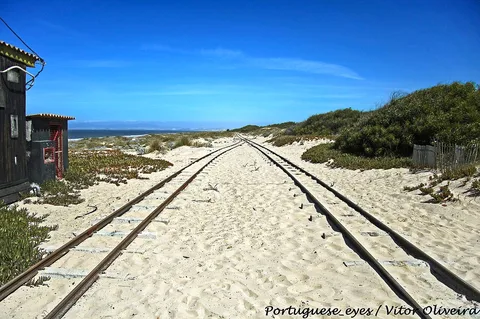
Costa da Caparica is about 20–30 minutes by car from Lisbon via the 25 de Abril Bridge, or by bus. In summer, the Transpraia mini-train runs along the beaches south of the town. In season, the beaches have lifeguards, beach bars, restaurants, toilets, showers and sunshade rentals, and several have the Blue Flag. Surf schools are numerous, and the waves are suitable for all levels. The town has a lively atmosphere, with restaurants, bars and nightlife.
Costa da Caparica suits surfers, families, young travellers and city visitors. It is the closest Atlantic beach to Lisbon and a favourite with Lisbon residents. The variety of beaches means you can find lively spots or quiet stretches. The water is cold and the waves can be strong, so swim in supervised areas. Take the Transpraia train south for quieter beaches, and enjoy the seafood restaurants and beach bars at sunset. The northern beaches, such as Praia do CDS, Praia do Paraíso and the stretches near the town centre, are the most developed and best for lessons, while the southern stretches reached by the Transpraia feel almost empty on weekdays. Traffic over the bridge back to Lisbon can be heavy on summer Sunday evenings, so leaving early or using the ferry from Cacilhas is worth considering.
Good to know
- Highlight: Clean Atlantic swimming waters
- Highlight: Scenic coastline & natural surroundings
- Highlight: Verified coastal access & seasonal services
Frequently Asked Questions
Is this beach safe for swimming and families?
Swimming safety depends on sea conditions and season. During the official bathing season (June to September), licensed beaches are monitored by certified lifeguards. Always follow warning flags (green = safe, yellow = caution, red = no swimming).
What facilities and parking are available?
Access routes, designated parking spaces, and seasonal cafes or restrooms vary by cove. Arriving before 10:00 or after 16:30 is strongly advised during peak summer months to secure vehicle parking.
How cold is the Atlantic water here?
Water temperatures along the Portuguese coast range from 15°C–18°C in spring up to 20°C–23°C in late summer (August–September), with the warmest waters typically found in the eastern Algarve.
Beaches nearby
Related topics
Falling for this coastline?
Plenty of visitors do — and some stay. Residency, taxes and housing along the Portuguese coast, handled by our licensed partner.
Explore living in Portugal →