Praia da Ilha do Pessegueiro
Atlantic Beach · Sines, Setúbal district

| Coast / Municipality | Sines, Setúbal district |
|---|---|
| Beach Type | Atlantic Beach |
| Swimming & Sea Access | Verified Atlantic coastal waters |
| Region | Portugal Coast |
The Praia da Ilha do Pessegueiro is a beach on the Alentejo coast, south of Porto Covo, facing a small island of the same name. The island has the ruins of a 17th-century fort, and archaeological evidence shows it was used since Roman times, including fish-salting tanks. On the mainland, another fort, the Forte de Nossa Senhora da Queimada, overlooks the beach. The beach is a long stretch of golden sand with clear water, sheltered in part by the island, creating calm conditions on many days. The setting is beautiful and atmospheric, with the island and its ruins on the horizon.
The Praia da Ilha do Pessegueiro is a beach on the Alentejo coast, south of Porto Covo, facing a small island of the same name. The island has the ruins of a 17th-century fort, and archaeological evidence shows it was used since Roman times, including fish-salting tanks. On the mainland, another fort, the Forte de Nossa Senhora da Queimada, overlooks the beach. The beach is a long stretch of golden sand with clear water, sheltered in part by the island, creating calm conditions on many days. The setting is beautiful and atmospheric, with the island and its ruins on the horizon.
The beach is reached by car from Porto Covo, about 5 minutes away, with parking near the beach. In the bathing season, there are lifeguards, a beach restaurant and basic facilities. The restaurant is known for its fish and seafood, especially its seafood rice. Boat trips to the island are sometimes available from Porto Covo, and the island can be reached by kayak in calm conditions, though landing requires care. The sea can have strong currents, especially in the channel between the beach and the island.
The Praia da Ilha do Pessegueiro suits families, couples and history lovers. The calm water on many days makes it good for swimming and paddle boarding. The view of the island and its ruins is one of the most iconic on the Alentejo coast. Combine with a walk along the Fishermen's Trail, a visit to Porto Covo and a meal at the beach restaurant. The beach is less crowded than many in the Algarve, offering a peaceful, authentic experience. Although the island looks close, swimming across is not recommended because of the currents in the channel. Instead, enjoy the view from the beach or from the mainland fort, especially in the late afternoon, when the island and its ruins are silhouetted against the light. The campsite nearby makes this a good base for hikers on the Rota Vicentina.
Good to know
- Highlight: Clean Atlantic swimming waters
- Highlight: Scenic coastline & natural surroundings
- Highlight: Verified coastal access & seasonal services
Frequently Asked Questions
Is this beach safe for swimming and families?
Swimming safety depends on sea conditions and season. During the official bathing season (June to September), licensed beaches are monitored by certified lifeguards. Always follow warning flags (green = safe, yellow = caution, red = no swimming).
What facilities and parking are available?
Access routes, designated parking spaces, and seasonal cafes or restrooms vary by cove. Arriving before 10:00 or after 16:30 is strongly advised during peak summer months to secure vehicle parking.
How cold is the Atlantic water here?
Water temperatures along the Portuguese coast range from 15°C–18°C in spring up to 20°C–23°C in late summer (August–September), with the warmest waters typically found in the eastern Algarve.
Beaches nearby
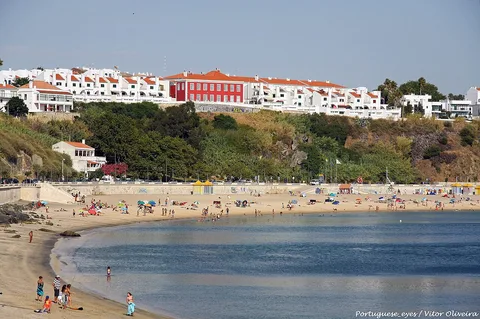 Sines, Setúbal district · Atlantic Beach
Praia Vasco da Gama
Praia Vasco da Gama is the main town beach of Sines, a historic port town and the birthplace of the explorer Vasco da Gama.
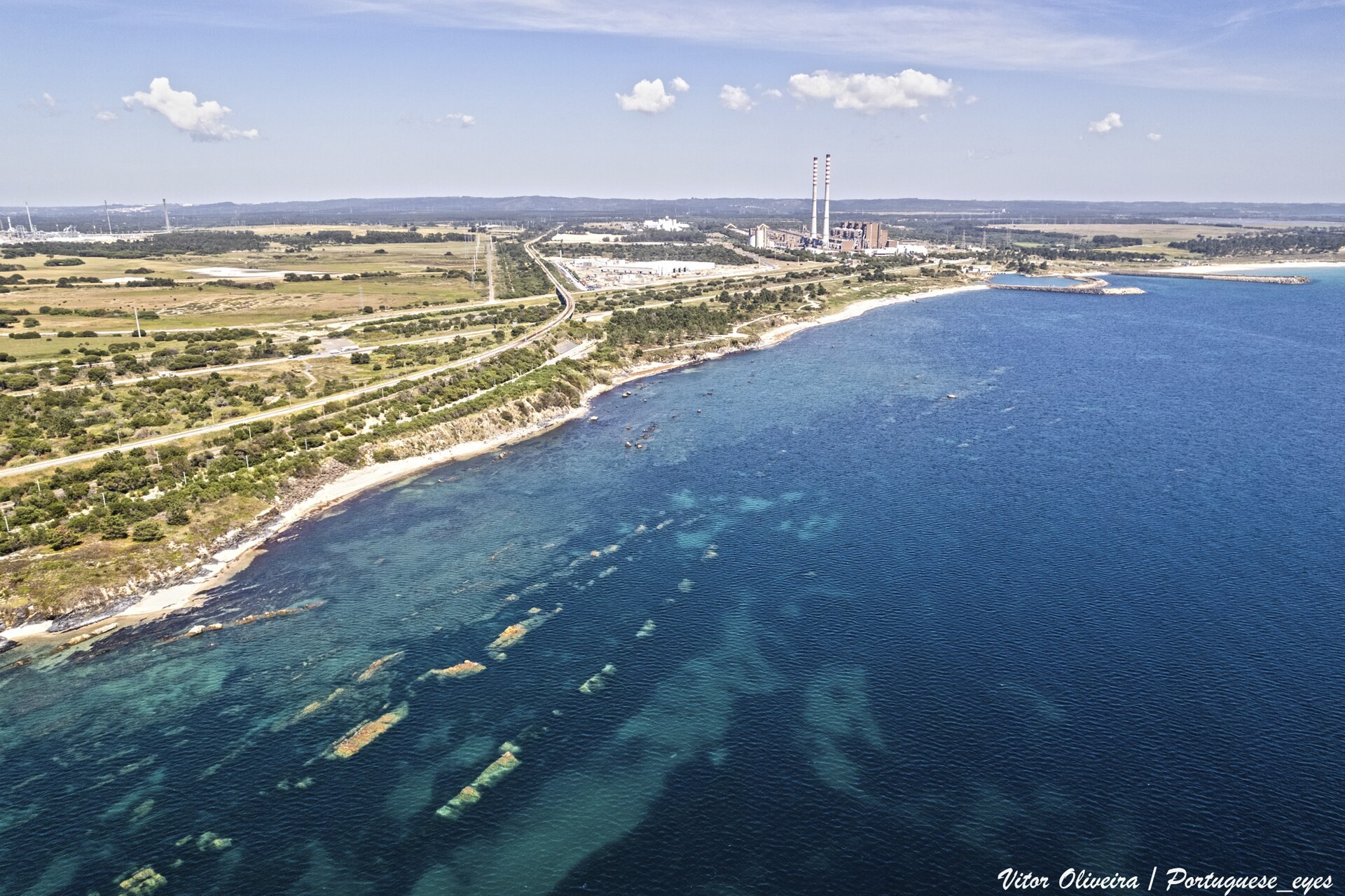 Sines, Setúbal district · Atlantic Beach
Praia de São Torpes
São Torpes is a long, wide beach south of Sines, popular with surfers and bodyboarders for its consistent waves.
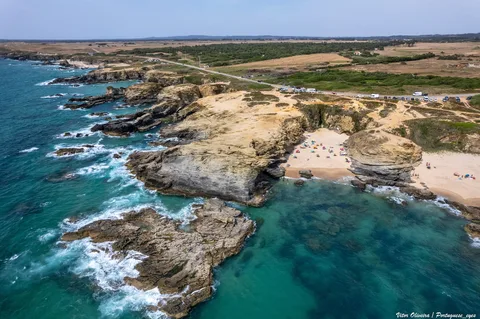 Sines, Setúbal district · Atlantic Beach
Praia Grande de Porto Covo
Porto Covo is one of the most charming villages on the Alentejo coast, with whitewashed houses trimmed in blue, a pretty central square and a small fishing harbour.
Related topics
Falling for this coastline?
Plenty of visitors do — and some stay. Residency, taxes and housing along the Portuguese coast, handled by our licensed partner.
Explore living in Portugal →