Praia de Miramar
Atlantic Beach · Vila Nova de Gaia, Porto district

| Coast / Municipality | Vila Nova de Gaia, Porto district |
|---|---|
| Beach Type | Atlantic Beach |
| Swimming & Sea Access | Verified Atlantic coastal waters |
| Region | Portugal Coast |
Praia de Miramar is one of the most photographed beaches in northern Portugal thanks to the Capela do Senhor da Pedra, a small hexagonal chapel built directly on a rock at the edge of the sea. The chapel, dating from the 17th century and associated with older pre-Christian worship of the site, appears to float on the water at high tide. Around it stretches a wide sandy beach with low rocks, backed by a coastal boardwalk and an upscale residential neighbourhood with villas and a historic golf course. The sea is cold, the waves are steady and the light at sunset is magnificent.
Praia de Miramar is one of the most photographed beaches in northern Portugal thanks to the Capela do Senhor da Pedra, a small hexagonal chapel built directly on a rock at the edge of the sea. The chapel, dating from the 17th century and associated with older pre-Christian worship of the site, appears to float on the water at high tide. Around it stretches a wide sandy beach with low rocks, backed by a coastal boardwalk and an upscale residential neighbourhood with villas and a historic golf course. The sea is cold, the waves are steady and the light at sunset is magnificent.
Miramar has a train station on the Porto–Aveiro suburban line, just a few minutes' walk from the beach, so it is easy to reach without a car. There is also parking near the chapel and along the coast. In the bathing season the beach has lifeguards, beach bars, sunshade rentals and toilets, and it has frequently received the Blue Flag. The boardwalk connects Miramar with Granja to the south and Francelos to the north, making it ideal for a long seaside walk. Every year a religious festival in honour of Senhor da Pedra brings pilgrims and celebrations.
Miramar suits photographers, couples and families, as well as travellers who want to visit an iconic landmark. It is quieter than the Porto city beaches and has a more relaxed, residential atmosphere. Families appreciate the space and the supervised areas, while surfers and bodyboarders sometimes find good waves. Come at sunset or at high tide to see the chapel at its most striking. Be careful when walking on the rocks around the chapel, as they can be slippery.
Good to know
- Highlight: Clean Atlantic swimming waters
- Highlight: Scenic coastline & natural surroundings
- Highlight: Verified coastal access & seasonal services
Frequently Asked Questions
Is this beach safe for swimming and families?
Swimming safety depends on sea conditions and season. During the official bathing season (June to September), licensed beaches are monitored by certified lifeguards. Always follow warning flags (green = safe, yellow = caution, red = no swimming).
What facilities and parking are available?
Access routes, designated parking spaces, and seasonal cafes or restrooms vary by cove. Arriving before 10:00 or after 16:30 is strongly advised during peak summer months to secure vehicle parking.
How cold is the Atlantic water here?
Water temperatures along the Portuguese coast range from 15°C–18°C in spring up to 20°C–23°C in late summer (August–September), with the warmest waters typically found in the eastern Algarve.
Beaches nearby
 Vila Nova de Gaia, Porto district · Atlantic Beach
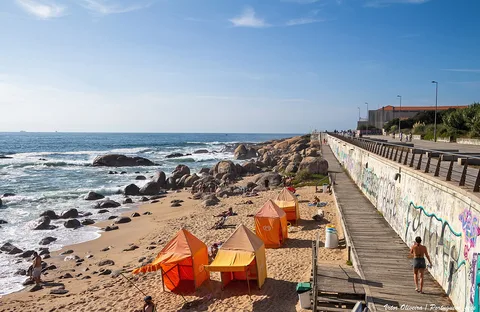
Praia de Lavadores
Lavadores lies on the coast of Vila Nova de Gaia, south of the Douro River mouth, and is known for its striking granite rocks, many of them smoothed and rounded by the sea into sculptural shapes.
 Vila Nova de Gaia, Porto district · Atlantic Beach
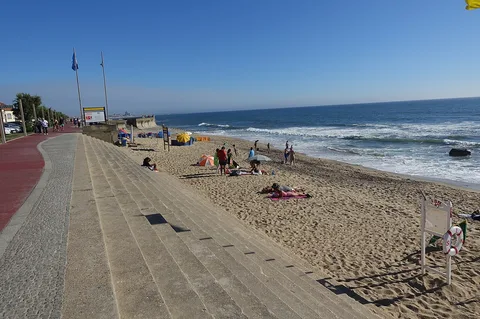
Praia da Granja
Granja is a small, elegant seaside resort on the border between Vila Nova de Gaia and Espinho, known since the 19th century as a holiday spot for Porto's wealthy families.
Related topics
Falling for this coastline?
Plenty of visitors do — and some stay. Residency, taxes and housing along the Portuguese coast, handled by our licensed partner.
Explore living in Portugal →