Praia da Ursa
Atlantic Beach · Sintra, Lisbon district

| Coast / Municipality | Sintra, Lisbon district |
|---|---|
| Beach Type | Atlantic Beach |
| Swimming & Sea Access | Verified Atlantic coastal waters |
| Region | Portugal Coast |
Praia da Ursa is a wild, remote beach near Cabo da Roca, the westernmost point of mainland Europe. It is considered one of the most spectacular beaches in Portugal, thanks to its dramatic rock formations rising from the sea, including the rock said to resemble a bear (ursa), which gives the beach its name. The beach is a stretch of golden sand at the base of high cliffs, with no development or facilities. The sea is cold and powerful, with strong currents, and swimming is dangerous on most days.
Praia da Ursa is a wild, remote beach near Cabo da Roca, the westernmost point of mainland Europe. It is considered one of the most spectacular beaches in Portugal, thanks to its dramatic rock formations rising from the sea, including the rock said to resemble a bear (ursa), which gives the beach its name. The beach is a stretch of golden sand at the base of high cliffs, with no development or facilities. The sea is cold and powerful, with strong currents, and swimming is dangerous on most days.
Access is the main challenge. From a small parking area along the road near Cabo da Roca, a steep, rough path descends the cliff to the beach, taking about 20–30 minutes on the way down and longer on the way back. Good footwear is essential, and the path is not suitable for young children or people with reduced mobility. There are no lifeguards, no facilities and no shade, so bring water, food and sun protection. The beach is unofficially used by naturists in some areas.
Praia da Ursa suits adventurous travellers, hikers and photographers who want a wild, untouched beach. It is one of the most impressive landscapes on the Portuguese coast, especially at sunset. Swimming is not recommended due to the strong currents and lack of lifeguards. Combine a visit with Cabo da Roca and its lighthouse, and with the nearby Adraga beach. Be careful on the path, especially when wet, and plan your return before dark. The best light for photographs comes in the hour before sunset, when the sea stacks glow orange against the darkening ocean. In winter and after rain the path becomes muddy and slippery, so the beach is really a fair-weather outing between late spring and early autumn.
Good to know
- Highlight: Clean Atlantic swimming waters
- Highlight: Scenic coastline & natural surroundings
- Highlight: Verified coastal access & seasonal services
Frequently Asked Questions
Is this beach safe for swimming and families?
Swimming safety depends on sea conditions and season. During the official bathing season (June to September), licensed beaches are monitored by certified lifeguards. Always follow warning flags (green = safe, yellow = caution, red = no swimming).
What facilities and parking are available?
Access routes, designated parking spaces, and seasonal cafes or restrooms vary by cove. Arriving before 10:00 or after 16:30 is strongly advised during peak summer months to secure vehicle parking.
How cold is the Atlantic water here?
Water temperatures along the Portuguese coast range from 15°C–18°C in spring up to 20°C–23°C in late summer (August–September), with the warmest waters typically found in the eastern Algarve.
Beaches nearby
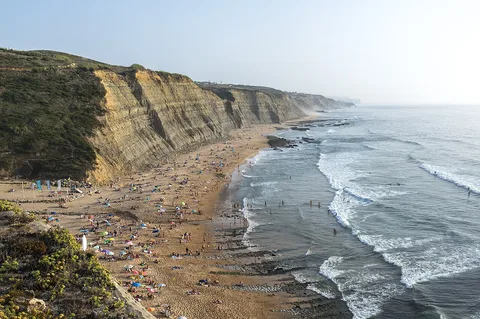 Sintra, Lisbon district · Atlantic Beach
Praia do Magoito
Magoito is a wild beach on the northern coast of Sintra, set at the bottom of tall cliffs.
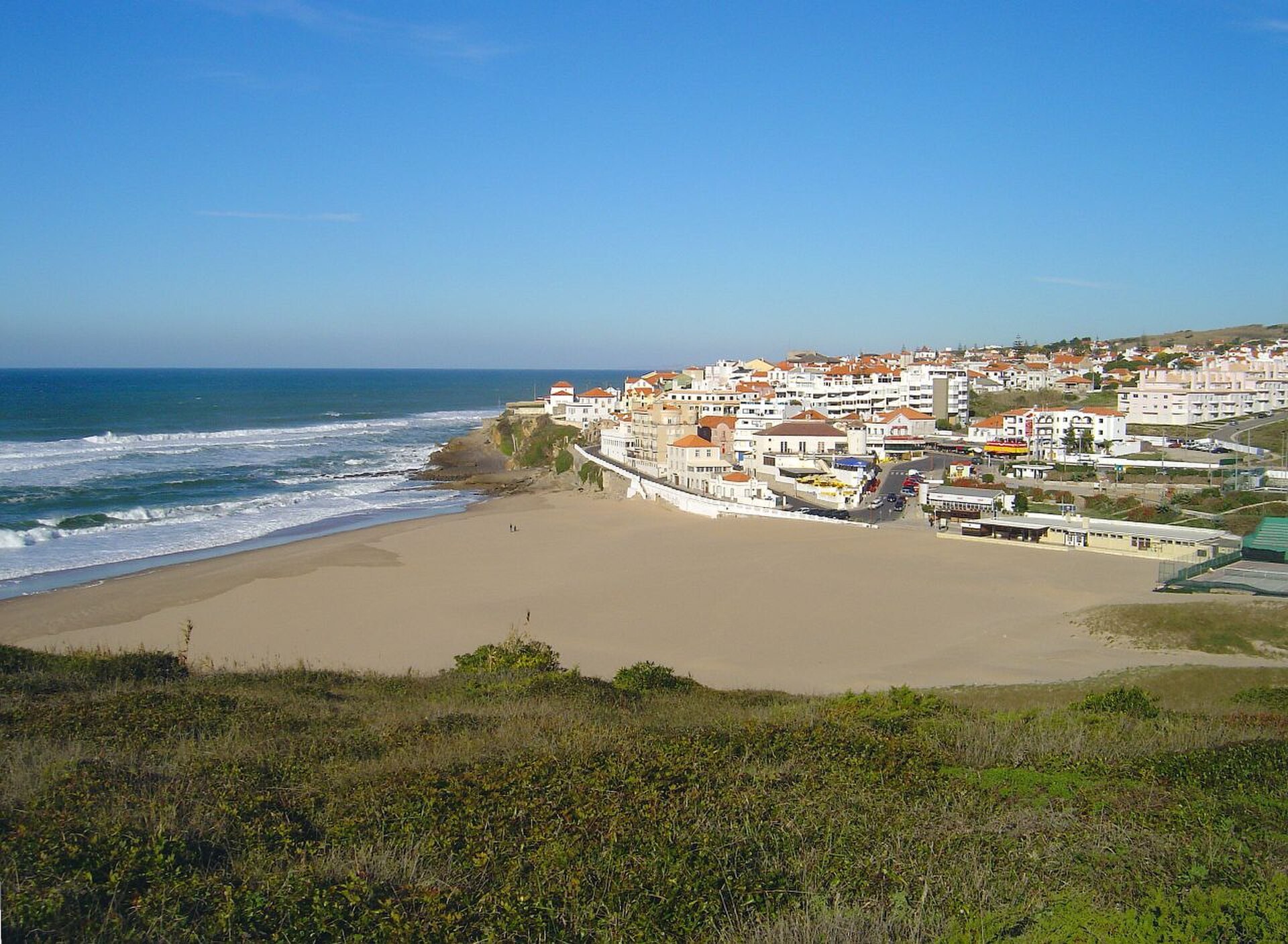 Sintra, Lisbon district · Atlantic Beach
Praia das Maçãs
Praia das Maçãs is a traditional beach resort on the Sintra coast, popular with Lisbon families since the early 20th century.
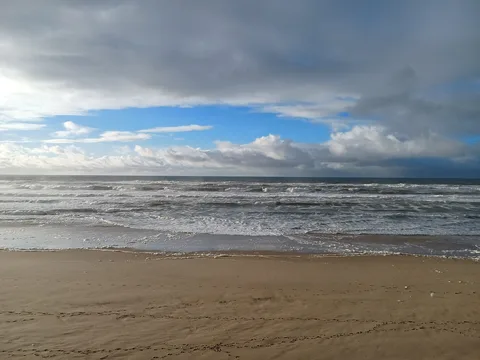 Sintra, Lisbon district · Atlantic Beach
Praia Grande (Sintra)
Praia Grande, "Big Beach," is one of the largest beaches on the Sintra coast, a wide stretch of sand between tall cliffs.
Related topics
Falling for this coastline?
Plenty of visitors do — and some stay. Residency, taxes and housing along the Portuguese coast, handled by our licensed partner.
Explore living in Portugal →